
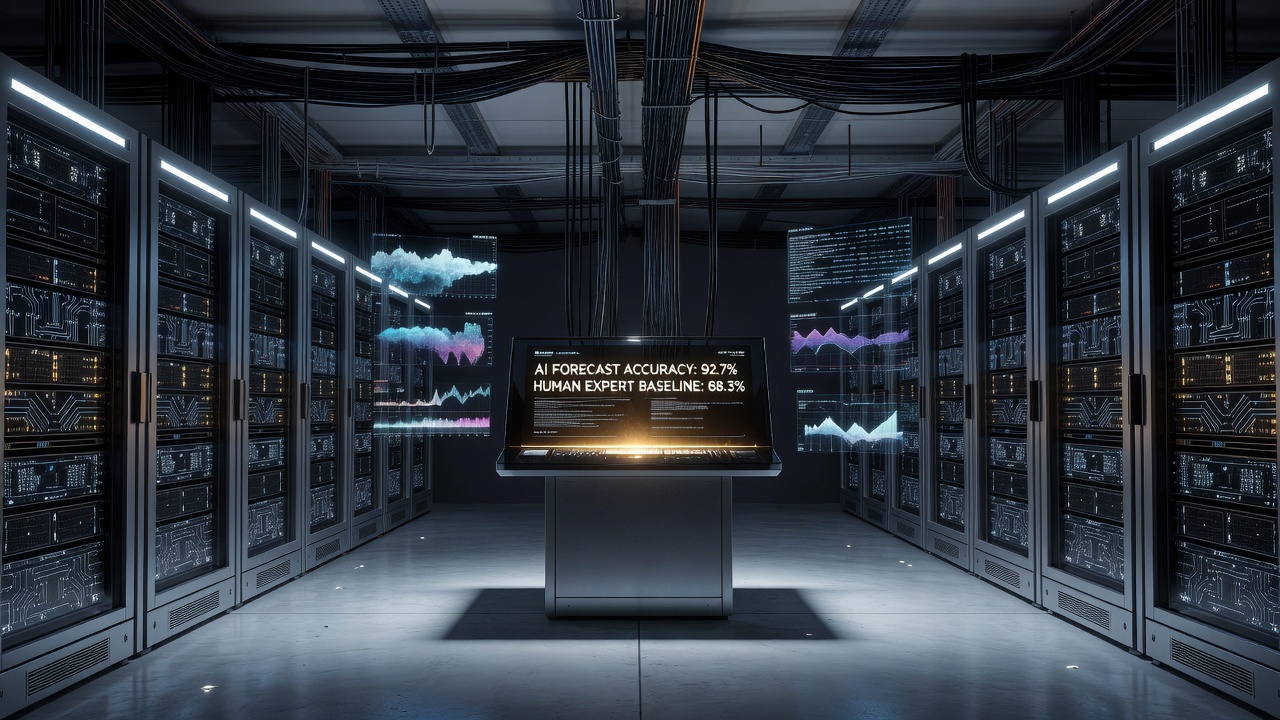
A handful of startups are wagering that artificial intelligence can outpredict even the sharpest human analysts, whether the question concerns a stock's next move, the status of a contested shipping channel in the Middle East, or how a pop single will climb the charts. The claim is no longer speculative. In early September, two AI models topped the Metaculus Cup, a competition that pits forecasting systems against elite human predictors, marking what organizers and participants describe as a turning point for the field.
The technology behind these systems draws on vast pools of public and private data, cross-referencing interconnected variables, say, oil prices and geopolitical tension, to assign probabilities rather than certainties. That distinction matters. A forecast is not a guarantee, but a weighted estimate that updates as new information arrives. For everyday users curious about the infrastructure that supports this kind of data-intensive work, the economics are increasingly modest; much as someone might compare what a monthly plan costs for a privacy tool before committing, access to serious forecasting tools is becoming less a matter of elite research budgets and more a question of subscription tiers. what a monthly plan costs
From Superforecasters to Algorithms
For more than a decade, a small cadre of so-called superforecasters has outperformed ordinary analysts by wide margins, their judgment honed through systematic calibration and relentless self-correction. Dan Schwarz, cofounder of FutureSearch, says even his own in-house expert, Tom Liptay, recognizes the writing on the wall: the machines are catching up fast, and in some competitive settings, they have already pulled ahead. By 2030, Schwarz predicts, today's decision-making methods will look primitive by comparison.
Markets, Money, and the Automation Race
Wall Street has run on algorithms for years, but AI forecasting threatens to push automation further and faster. Toby Shevlane of Mantic says clients already factor machine-generated predictions into trading decisions. Theo Summer, cofounder of Preseen, turned a modest sum into nearly two million dollars in seven months trading on the prediction platform Kalshi, a feat that underscores how quickly these tools can translate probability into profit. Hedge funds, with their appetite for speed and capital, are moving first. Veniamin Veselovsky, Preseen's other cofounder, warns that retail investors on consumer platforms like Kalshi and Polymarket may soon find themselves outmatched, since those marketplaces "will soon just be dominated by AI forecasting systems."
Beyond Finance: Policy, Science, and Risk
The reach of these systems extends well past trading floors. Mantic has advised a major American company on regulatory scenarios and has consulted for the British government on risk monitoring. Other clients are exploring medical research applications, using probability modeling to help prioritize which treatments deserve funding. The most sophisticated models no longer simply answer questions, they generate their own, then assign likelihoods to the outcomes they imagine.
That expanding influence carries real risk. Veselovsky acknowledges the promise of the technology but voices a geopolitical worry shared by many in the field: if rival nations develop superior forecasting systems first, the advantage could shift decisively, and unpredictably, beyond anyone's control.